Hire an E-Commerce SEO Specialist
Hire an e-commerce SEO specialist if you need a comprehensive strategy covering keyword research, on-page optimization, technical SEO, and link building for your online store.


From my hands on experience with eCommerce SEO, I’ve seen how tailored services make a real difference when compared to general SEO strategies. While both aim to improve rank and drive better results, eCommerce SEO focuses on optimizing online stores by refining website structure, improving product and category pages, and addressing the unique needs of buyers. This approach helps convert potential customers more effectively by ensuring search engine visibility. Unlike broader tactics, professional eCommerce SEO dives deep into how people interact with digital stores, helping them appear higher in search listings and attract the right traffic.
One of the biggest struggles I’ve seen with new eCommerce clients is getting noticed in a competitive space. By focusing on SEO, we help their site become more visible when customers are searching online for a product. Since most shoppers begin with a search query on a search engine like Google, it’s crucial that the site ranks higher on results pages or SERPs. That extra visibility not only improves traffic but brings in more potential customers actively looking for what you offer.
What makes SEO powerful is how it allows us to pull in targeted traffic. We use specific keywords that match what your audience is really searching for. With experience, I’ve learned how important it is to use relevant and buyer intent terms to truly attract qualified leads. This means reaching shoppers already interested in your products, which results in higher-quality visits that have a better chance of converting.
Getting traffic is only part of the goal converting that traffic matters more. By optimizing your product pages with strong keywords, clear descriptions, and a smooth user experience, we increase the chance that your visitors become loyal customers. In my work, I’ve seen how these small adjustments can lead to significantly better conversion rates.
Many businesses I’ve worked with are surprised when they realize how cost-effective marketing through SEO really is. Unlike paid advertising, organic search results are totally free once your site starts ranking well. Instead of burning budget on ads, we focus on long-term growth with an optimized strategy that keeps delivering traffic over time a smart long term strategy that pays off.
One of the easiest ways to build trust is by having a high ranking on search engines. In every project I’ve led, I noticed that when a site appears at the top of Google results, customers instantly see it as more credible. Strong SEO builds trust, not just with algorithms, but with real people. It positions your business as a trusted brand, which is priceless in today’s market.
Great SEO isn’t only about visibility it also improves the overall user experience. When we work on site speed, mobile optimization, and smooth navigation, users naturally stay longer and engage more. These best practices reduce bounce rates and keep customers engaged, which eventually leads to more sales. I always tell clients: if your site is easy to use, people will want to stay and shop.

Start by knowing what you want from SEO whether it’s driving traffic, improving rankings, or increasing sales, clear goals help focus your efforts.
Always choose someone with eCommerce experience who has a strong record in optimizing online stores and handling product heavy websites.
Check if they offer a clear strategy with technical SEO, solid keyword research, and content optimization that’s tailored to your needs.
Look for case studies or reviews showing measurable results like better conversions or higher traffic.
Make sure they offer clear communication, share regular reports, and provide helpful insights to track real progress.

Running an e-commerce store without SEO is like setting up shop on a quiet street, while proper SEO services move your website to the center of a busy mall. From my experience, when you optimize your site, it starts to rank higher on search engine result pages, drawing more visitors. Research even shows that 63% of shopping occasions start online, so by capturing this potential, you’re opening the door to more customers, and more sales. I’ve seen businesses double their traffic just by improving their visibility for the right keywords and boosting their presence on pages that matter.
I often think of good SEO as a spotlight shining on your brand, helping your products stand out to shoppers in a crowded market. With the right keywords and high-quality content, your product pages can appear prominently in relevant searches. This visibility is crucial especially when so many brands are competing for attention. The right SEO strategy attracts new customers while reinforcing your image with existing customers, turning you into a go-to name in your niche.
A well optimized site isn’t just about attracting traffic; it’s about keeping users engaged. I’ve helped brands create a seamless user experience using fast loading pages, easy navigation, and mobile friendly designs. When customers can find what they need quickly and effortlessly, they’re more likely to purchase, return in the future, and feel a positive connection. Over time, this builds trust and loyalty, both essential for sustaining long-term business relationships.
One of the most exciting parts of e-commerce SEO is how it opens doors to the global marketplace. By using geo-targeted strategies and optimizing for international engines, I’ve seen clients reach beyond their local area. Big brands like Walmart and IKEA have successfully expanded by embracing SEO joining platforms like Amazon and eBay to tap into a much broader audience. With the right approach, your business can also enjoy these benefits, grow your customer base, and drive real growth.
SEO helps your online store become more visible and attract targeted customers.
It helps your site rank higher on search engines when potential customers search online.
They attract qualified shoppers who are already looking for your products.
Optimized pages and user experience lead to higher chances of turning visitors into buyers.
Yes, once ranked, organic traffic is free and delivers long term results.
Learn how professional eCommerce SEO services can improve your online store’s visibility, attract targeted shoppers, and increase sales. Optimize product pages, enhance search rankings, and drive sustainable growth with strategies designed for long-term success.
Running an online store is more competitive than ever. Thousands of businesses are selling similar products across the same platforms, the same categories, and the same search results. Paid advertising can bring traffic quickly, but the moment you stop spending, the traffic stops too. E-commerce SEO is different. It builds the kind of visibility that compounds over time — bringing in consistent, targeted, high-intent organic traffic from buyers who are actively searching for exactly what you sell.
Search engine optimization for e-commerce is not the same as general website SEO. It requires a deep understanding of how product pages, category pages, site architecture, internal linking, schema markup, and keyword intent work together to rank a store in an extremely competitive search environment. It also requires knowledge of platform-specific requirements for Shopify, WooCommerce, Magento, BigCommerce, and other e-commerce platforms.

E-commerce SEO services help online stores improve search engine rankings, drive targeted organic traffic, optimize product and category pages, and grow sales sustainably — without relying entirely on paid advertising.
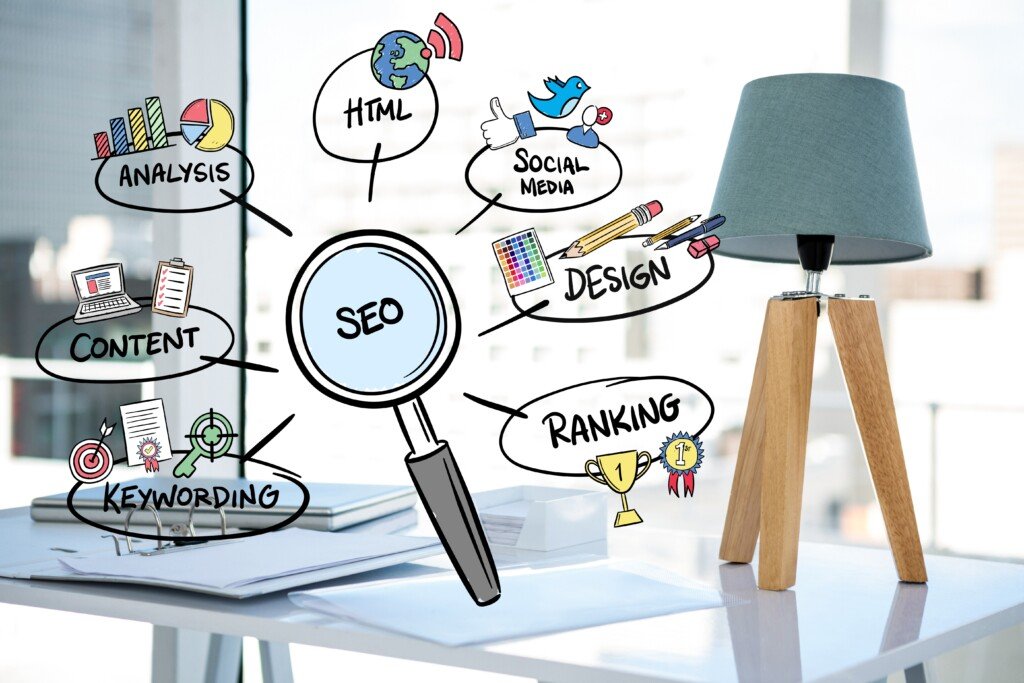
E-commerce SEO is the process of optimizing an online store so that its pages appear higher in search engine results when potential customers search for products, categories, or related topics. The goal is to attract organic — unpaid — traffic from search engines like Google and Bing by making every part of the store as relevant, authoritative, and technically sound as possible.
E-commerce SEO covers a wide range of disciplines. On-page SEO includes optimizing product titles, descriptions, meta tags, headers, images, and internal links on individual pages. Technical SEO addresses site speed, crawlability, indexation, structured data, canonical tags, duplicate content, and mobile optimization. Off-page SEO builds the store’s authority through link building, digital PR, and brand mentions from external websites. Content SEO creates blog posts, buying guides, comparison pages, and informational content that captures search traffic at every stage of the buyer journey.
Unlike general SEO, e-commerce SEO must handle unique challenges — large product catalogs with hundreds or thousands of pages, faceted navigation that generates duplicate URLs, seasonal inventory changes, product variant pages, pagination, and the constant need to balance search optimization with conversion optimization. A skilled e-commerce SEO specialist understands all of these challenges and knows how to address them for your specific platform and industry.

Professional e-commerce SEO can help your online store attract more organic traffic, reduce dependence on paid advertising, improve conversion rates, and build long-term, sustainable revenue growth.
E-commerce SEO targets the specific keywords that buyers use when they are ready to purchase — product names, brand terms, comparison phrases, and category searches. Ranking for these high-intent keywords brings in traffic that is far more likely to convert into sales than broad informational traffic.
Unlike paid advertising, organic search rankings continue to deliver traffic without ongoing cost-per-click spending. Once your product and category pages rank well, they can generate consistent traffic and revenue month after month — making SEO one of the most cost-effective long-term marketing investments available to e-commerce businesses.
E-commerce SEO improves the quality, relevance, and discoverability of every product and category page in your store. Optimized pages rank better, load faster, communicate more clearly, and convert visitors into buyers more effectively — improving both search performance and overall store revenue.
Appearing at the top of search results builds credibility. When your store consistently ranks highly for relevant product searches, shoppers perceive your brand as more established and trustworthy — which increases the likelihood of both first-time purchases and repeat business.
There are many types of e-commerce SEO services, and the right combination depends on your store’s current performance, platform, product catalog size, competitive landscape, and growth goals.
An e-commerce SEO audit is the starting point for any serious optimization strategy. It involves a comprehensive analysis of your store’s technical health, on-page optimization, site structure, keyword rankings, backlink profile, duplicate content issues, crawlability, and indexation status. The audit identifies exactly what is holding your store back from ranking and provides a clear roadmap for improvement.
E-commerce keyword research identifies the specific search terms that buyers use when searching for products in your category — including product keywords, category keywords, brand keywords, comparison keywords, and long-tail buying phrases. A strong keyword strategy maps the right keywords to the right pages across your entire store, ensuring every page targets search terms with genuine commercial intent.
Product page SEO optimization improves every element of individual product pages — titles, meta descriptions, headings, product descriptions, image alt text, schema markup, internal links, and page speed. Well-optimized product pages rank higher for product-specific searches, communicate more value to potential buyers, and convert more of that traffic into purchases.
Category pages are often the highest-traffic and highest-converting pages in an e-commerce store — and they are frequently the most under-optimized. Category page SEO improves the structure, content, internal linking, and technical setup of collection pages so they rank for broad category-level searches and capture buyers at the top of the purchase funnel.
Technical SEO for e-commerce addresses the underlying structure and performance of your online store. This includes improving site speed and Core Web Vitals, fixing crawl errors and broken links, managing duplicate content caused by faceted navigation and product variants, implementing structured data and schema markup, optimizing XML sitemaps, managing canonical tags, and ensuring full mobile optimization.
Content SEO helps e-commerce stores capture organic traffic from buyers at every stage of the purchase journey — not just those ready to buy immediately. This includes creating optimized buying guides, product comparison articles, how-to content, gift guides, trend roundups, and informational blog posts that attract top-of-funnel traffic and build internal links to product and category pages.
Link building improves your store’s domain authority and page authority by acquiring high-quality backlinks from relevant, authoritative external websites. E-commerce link building strategies include digital PR, product gifting for reviews, supplier and manufacturer links, resource page link building, broken link building, and editorial outreach to industry publications and blogs.
Local e-commerce SEO helps online stores that also serve specific geographic markets rank in local search results. This includes optimizing Google Business Profile listings, local keyword targeting, location-specific landing pages, local citation building, and managing location-based structured data.
There are different ways to access e-commerce SEO support. The best option depends on your budget, store size, the complexity of your SEO needs, and how quickly you need to move.
A freelance e-commerce SEO specialist can be a great choice for focused projects — SEO audits, keyword research, product page optimization, technical fixes, content strategy, or link building campaigns. Freelancers are often more affordable than agencies and can provide highly specialized expertise for specific aspects of your SEO strategy.
An SEO agency may be better for larger stores that need a full-service team handling technical SEO, content creation, link building, and ongoing optimization simultaneously. Agencies bring broader resources and can manage high-volume, multi-channel SEO campaigns across large product catalogs.

Choosing the right e-commerce SEO specialist is important because the wrong approach — or a poorly executed strategy — can waste budget, damage rankings, or even result in Google penalties. Before hiring, make sure the professional has genuine e-commerce experience and a clear, ethical, and data-driven approach to optimization.
Start by identifying what you most need from e-commerce SEO. Do you want to increase organic traffic to existing product pages, improve rankings for specific category terms, fix technical issues that are holding back crawling and indexation, build domain authority through link building, or create a content strategy that attracts buyers earlier in the purchase journey? Clear goals help you find the right type of specialist and set measurable targets from the start.
E-commerce SEO on Shopify is different from WooCommerce, Magento, BigCommerce, or a custom-built store. Each platform has specific SEO capabilities, limitations, and common issues. Always confirm that the specialist has direct experience optimizing stores on your specific platform before hiring.
Ask for case studies or examples of previous e-commerce SEO work. Look for measurable results — organic traffic growth, keyword ranking improvements, revenue from organic search, and conversion rate improvements — rather than vague claims about expertise. A strong e-commerce SEO specialist can demonstrate the impact of their work with clear data.
Effective e-commerce SEO starts with understanding how buyers search. Ask how the specialist approaches keyword research — whether they focus on buyer-intent terms, how they map keywords to specific page types, and how they identify opportunities across product, category, and content pages. A thorough keyword strategy is the foundation of every successful e-commerce SEO campaign.
Technical SEO is often where the biggest e-commerce ranking opportunities are hidden. Ask how the specialist handles duplicate content from faceted navigation, how they approach site speed optimization, how they manage crawl budgets for large catalogs, and whether they can implement structured data correctly for product pages.
E-commerce SEO is a long-term investment, and progress needs to be tracked clearly. Before hiring, confirm what metrics will be reported — organic traffic, keyword rankings, crawl health, backlinks, and revenue from organic search — how often reports will be shared, and how the specialist will communicate progress and changes in strategy over time.
E-commerce SEO takes time. Meaningful ranking improvements for competitive keywords typically take three to six months or longer, depending on your domain authority, competition level, and the volume of optimization work required. Be cautious of any specialist who promises fast results or guaranteed rankings. A trustworthy professional sets realistic expectations based on your specific situation.
Finding the right e-commerce SEO professional becomes easier when you know what type of support your store needs. On Finderdesk, you can explore e-commerce SEO experts based on your platform, goals, and store size.
Hire an e-commerce SEO specialist if you need a comprehensive strategy covering keyword research, on-page optimization, technical SEO, and link building for your online store.
Hire a technical SEO expert if your store has crawl issues, duplicate content problems, slow page speed, or indexation issues that are preventing your pages from ranking.
Hire a product page SEO specialist if you need systematic optimization of product titles, descriptions, meta tags, schema markup, and internal linking across a large product catalog.
Hire an e-commerce content strategist if you need buying guides, blog content, comparison pages, and informational articles that capture organic traffic across the full buyer journey.
Hire a link building specialist if you need to build domain authority through high-quality backlinks from relevant industry websites, digital PR, and editorial outreach.
Tell us about your online store and we'll help you find the right SEO, technical optimization, content strategy, or link building specialist.
E-commerce SEO projects can fail when the wrong approach is taken or the wrong professional is hired. Avoid these common mistakes before starting.
Low-cost SEO services often rely on outdated tactics keyword stuffing, spammy link building, or thin duplicate content that can trigger Google penalties and damage your rankings. Quality e-commerce SEO requires expertise, time, and the right tools. Investing in an experienced specialist delivers far better long-term results than chasing the lowest price.
E-commerce SEO is a long-term strategy. It takes time for search engines to crawl updated pages, for new content to gain authority, and for link-building efforts to move the needle on domain authority. Businesses that expect immediate results are often disappointed and abandon their SEO investment before it has had time to deliver meaningful returns.
Many e-commerce stores have significant technical issues — duplicate content from product variants, slow page loading, poor mobile performance, crawl errors — that prevent even the best on-page optimization from working effectively. Always address technical SEO alongside on-page and off-page work.
Ranking higher is only valuable if the traffic converts. A strong e-commerce SEO strategy optimizes for both search visibility and conversion rate — ensuring that the traffic landing on your product and category pages is qualified and that the pages themselves are designed to convert.
Many e-commerce stores focus all their SEO attention on individual product pages while ignoring category pages. Category pages often have the highest potential for broad keyword rankings and top-of-funnel traffic. Neglecting them leaves significant organic visibility on the table.
Tracking only keyword rankings without monitoring organic traffic, conversion rate, revenue from organic search, and click-through rates gives an incomplete picture of SEO performance. Always measure the full impact of your SEO investment, not just positional changes in search results.
E-commerce SEO services can help your online store build lasting organic visibility, attract more qualified buyers, reduce dependence on paid advertising, and grow revenue sustainably over time. Whether you need a comprehensive SEO audit, keyword research and strategy, product page optimization, category page SEO, technical fixes, e-commerce content marketing, link building, or local SEO, the right specialist can help your store compete more effectively in search results and convert more of that traffic into sales.
Before hiring, define your goals clearly, confirm platform experience, review measurable results from past projects, ask about technical SEO capabilities, discuss reporting processes, and set realistic expectations about timelines. The right professional will build an SEO strategy that is tailored to your store, your products, your audience, and your long-term growth goals.
If you need professional e-commerce SEO for your online store, explore e-commerce SEO experts on Finderdesk and find the right specialist to help your store rank higher and sell more.
Here are common questions businesses ask before hiring E-commerce SEO Specialist.
E-commerce SEO is the process of optimizing an online store so that its product pages, category pages, and other content rank higher in search engine results. The goal is to attract organic — unpaid — traffic from buyers who are actively searching for the products you sell, reducing reliance on paid advertising and building sustainable long-term revenue growth.
The cost of e-commerce SEO depends on the scope of work, store size, platform, competition level, and the specialist’s experience. A one-time SEO audit may cost $300–$2,000+. Ongoing monthly e-commerce SEO retainers typically range from $500–$5,000+ per month, depending on the volume of work and the size of the product catalog. Full-service agency packages for larger stores can cost $5,000–$20,000+ per month.
E-commerce SEO is a long-term strategy. For new stores or domains with low authority, meaningful ranking improvements typically take four to six months or longer. For established stores fixing specific technical issues or targeting lower-competition keywords, improvements can appear within weeks. In highly competitive niches, it may take six to twelve months of consistent effort to see significant ranking and traffic gains.
Regular SEO typically focuses on ranking a website’s homepage or a small number of key pages for a limited set of keywords. E-commerce SEO must optimize hundreds or thousands of product and category pages simultaneously, address unique technical challenges like faceted navigation and duplicate product variants, and balance search optimization with conversion optimization — all within the specific constraints of e-commerce platforms like Shopify, WooCommerce, or Magento.
The most important ranking factors for e-commerce stores include page speed and Core Web Vitals, mobile optimization, the quality and uniqueness of product descriptions, keyword optimization of product titles and category page content, internal linking structure, domain authority from backlinks, structured data and schema markup for products and reviews, and the overall technical health of the store including crawlability and correct indexation.
Yes, e-commerce SEO works for all major platforms including Shopify, WooCommerce, Magento, BigCommerce, and custom-built stores. Each platform has specific SEO capabilities, limitations, and common issues that need to be addressed by a specialist familiar with that platform. Shopify, for example, has limitations around URL structure and canonical tag management that require specific optimization approaches.
Technical SEO for e-commerce covers all the behind-the-scenes optimization that affects how search engines crawl, index, and rank your store. This includes improving site speed and Core Web Vitals, fixing duplicate content from faceted navigation and product variants, managing canonical tags, optimizing XML sitemaps, implementing structured data for products and reviews, resolving crawl errors, and ensuring full mobile compatibility across all pages.
Link building improves your store’s domain authority — how much search engines trust your website — by acquiring backlinks from other authoritative and relevant websites. A higher domain authority helps your product and category pages rank more competitively for their target keywords, especially in highly competitive niches where many stores are targeting the same search terms.
Get our latest news straight into your inbox