Hire a Customer Support Chatbot Developer
Hire a customer support chatbot developer if you need to automate answers to common customer questions, reduce support ticket volume, and deliver instant responses across live chat, WhatsApp, or email.


A chatbot is a computer program designed to simulate human conversation with an end user. Not all chatbots use artificial intelligence (AI), but modern ones often rely on conversational AI and natural language processing (NLP) techniques to better understand user questions and automate appropriate responses. These tools help chatbots interpret complex language, making interactions feel natural and allowing them to handle a wide range of queries from users. From my experience, the power of NLP and AI in these systems is what truly sets them apart, enabling smarter, smoother, and more useful conversations between humans and machines.

When I first explored how an AI chatbot like ChatGPT works, I was amazed by the behind the scenes process that powers such a natural experience. At first glance, you simply type a prompt or input into an app, and the chatbot responds instantly. But what really happens is much more layered. Your user input is passed to a powerful AI model, which then runs it through various systems using algorithms and complex calculations. This helps the engine understand the meaning, interpret your questions, and determine your intent. Behind the scenes, developers use development tools, commands, and technologies to configure how the models handle different queries, ensuring accurate answers and a better user experience.
Early chatbot applications were mostly FAQ-style tools with prewritten answers and limited features. These traditional programs followed rules-based programming, which meant they couldn’t interpret open ended expressions or respond to anything not predicted. But thanks to advances in AI technologies like natural language understanding (NLU) and deep learning, modern chatbots now grasp human language, even if your message has typos or translation errors. They map each expression to a specific intent and give back an appropriate response in a conversational AI style. With the help of machine learning, they continuously learn from user interactions and exposure to more data. I’ve noticed that today’s bots aren’t just smarter they feel more human, and that’s due to powerful language models and LLMs that help them understand nuance and tone.
One of the best parts about building with AI today is how platforms have evolved. Whether you’re using a no-code or low-code platform, it’s now possible to build AI chatbots faster, regardless of the stack you’re working with. These tools simplify integration with databases, external apps, and other systems. You can design for customer satisfaction, optimize responses, and even save the conversation history to review answers later. The complexity lies in the data availability, how well you organize your knowledge base, and how much you want to automate. I’ve used these tools myself, and having access to a list of keywords, structured programming logic, and smart technologies truly streamlines the entire build process. Whether you’re working on advanced applications or just experimenting with a platform, today’s chatbot journey is all about smarter design and continuous optimization.
After spending weeks testing every kind of AI chatbot I could find, I learned that the real difference lies in how well each app blends technology and human-like conversation. I didn’t just judge them based on one output or a single prompt. Instead, I focused on the overall conversational experience how natural it felt to chat in a back-and-forth way, how smooth the interacting was, and how clearly the answers came through. The best bots were those with strong fluency and accuracy, powered by a reliable AI model and smart engine under the hood. These bots offered more than just replies; they brought a complete combination of speed, clarity, and adaptability.
I also explored how well each chat app handled modern features like canvas-like layouts, quick search, and the ability to generate images, charts, or even mini-dashboards. Some even let you create and build your own flows with powerful tools, making the management of chats feel almost effortless. I valued platforms that offered solid technology, a flexible setup for different tasks, and allowed me to use my previous experiences and research to measure quality. One message or bot might shine in creativity, while another excelled in structure but the real winners offered the kind of smart design and ease that made using them a joy.
When we talk about a traditional chatbot, we mean simple chatbot software that uses a decision tree or menu navigation to guide a human conversation. These chatbots follow set phrases and respond based on keywords, often found on phone trees, apps, or social media. They work well for basic user questions but can cause confusion if the input doesn’t match the specific phrase expected. Their capabilities are limited because they cannot truly interpret or act beyond what is programmed.
On the other hand, an AI chatbot uses machine learning, natural language processing, and natural language understanding to better interpret and respond to questions. These chatbots learn from data sets and algorithms to improve their responses over time. They can handle more complex dialogue in a free-flowing way, reducing misunderstandings. The AI chatbot can predict user intent and optimize interactions without needing constant human intervention, making conversations smoother across any communication channel.
The virtual agent takes this a step further by combining conversational AI with deep learning and often robotic process automation in a single interface. It not only understands and responds but can also act on tasks like setting alarms for a morning commute affected by rain or delays. This evolution of chatbot software can self-improve through continuous learning, handle complex user questions, and perform actions without human help. This makes virtual agents a powerful tool to enhance user experience by bridging simple interaction with meaningful, practical help.


Working in digital solutions for years, I’ve seen how AI chatbots transform how businesses interact with customers. One of the most important advantages I’ve witnessed is their ability to accurately process natural human language and automate personalized service, which brings clear benefits to both sides. Whether it’s handling customer questions, addressing concerns, or managing complaints, chatbots respond quickly without needing a human response every time.
This responsiveness becomes even more valuable when urgent customer issues occur off-hours, during a weekend, or on a holiday. Previously, staffing customer service departments to meet unpredictable demand whether day or night was a costly and difficult endeavor. Now, chatbots consistently manage customer interactions 24×7, continuously improving the quality of their responses while keeping costs down.
What’s more, they automate workflows and free up employees from repetitive tasks, allowing human staff to focus on more meaningful work. This shift also helps eliminate long wait times across phone-based customer support, email support, chat support, and web-based support, since chatbots are available immediately to any number of users. From a user’s perspective, this seamless experience results in satisfied customers and, over time, increases brand loyalty.
From a business operations point of view, I’ve often advised clients struggling with staffing their customer support center around the clock. It’s not only expensive, but the time spent answering repetitive queries and conducting training to ensure uniform consistent answers adds up. Many have considered overseas enterprises for outsourcing, but that introduces a significant cost and reduces control over brand interaction with customers.
That’s where a chatbot proves invaluable. It can answer questions 24 hours, seven days a week. Whether it’s the first line of support, supplement support during peak periods, or to offload tedious repetitive questions, it lets human agents focus on complex issues. This helps reduce the number of users requiring human assistance, ultimately helping businesses efficiently scale up staff to meet increased demand and manage off-hours requests more effectively.
Beyond support, I’ve found that chatbots are just as impactful in sales. From assisting with sales lead generation to helping improve conversion rates, they guide a customer browsing a website answering questions about a product, service, or even the features, attributes, and plans. Because they can provide answers in situ, they help progress the customer toward purchase quickly. Even in complex purchases with a multistep sales funnel, a chatbot can ask lead qualification questions and even connect the customer with a trained sales agent when needed.
AI chatbots understand context and intent, while traditional ones follow scripted responses.
They use NLP and machine learning to interpret natural language and user intent.
Yes, no-code and low-code platforms make chatbot creation easy and fast.
They automate support, sales, HR, and customer service across channels.
They offer instant replies, 24/7 service, and reduce support workload.
Learn how professional AI chatbot services can automate customer interactions with intelligent, human-like conversations. Improve customer support, increase engagement, and streamline communication with custom AI chatbot solutions tailored to your business.
Every business that wants to grow needs to communicate faster, more consistently, and at greater scale than any human team alone can manage. Customers expect instant responses at any hour of the day. Sales teams need to qualify leads before human agents invest time. Support teams are overwhelmed with repetitive questions that drain resources and slow response times. AI chatbots solve all of these problems at once.
An AI chatbot is not just an automated message system. Modern AI chatbots powered by natural language processing, machine learning, and large language models can understand context, interpret user intent, hold multi-turn conversations, personalize responses, integrate with business systems, and continuously improve based on every interaction they handle. They do not just answer questions — they automate entire workflows, guide customers through purchase decisions, qualify leads, schedule appointments, and escalate complex issues to human agents at exactly the right moment.
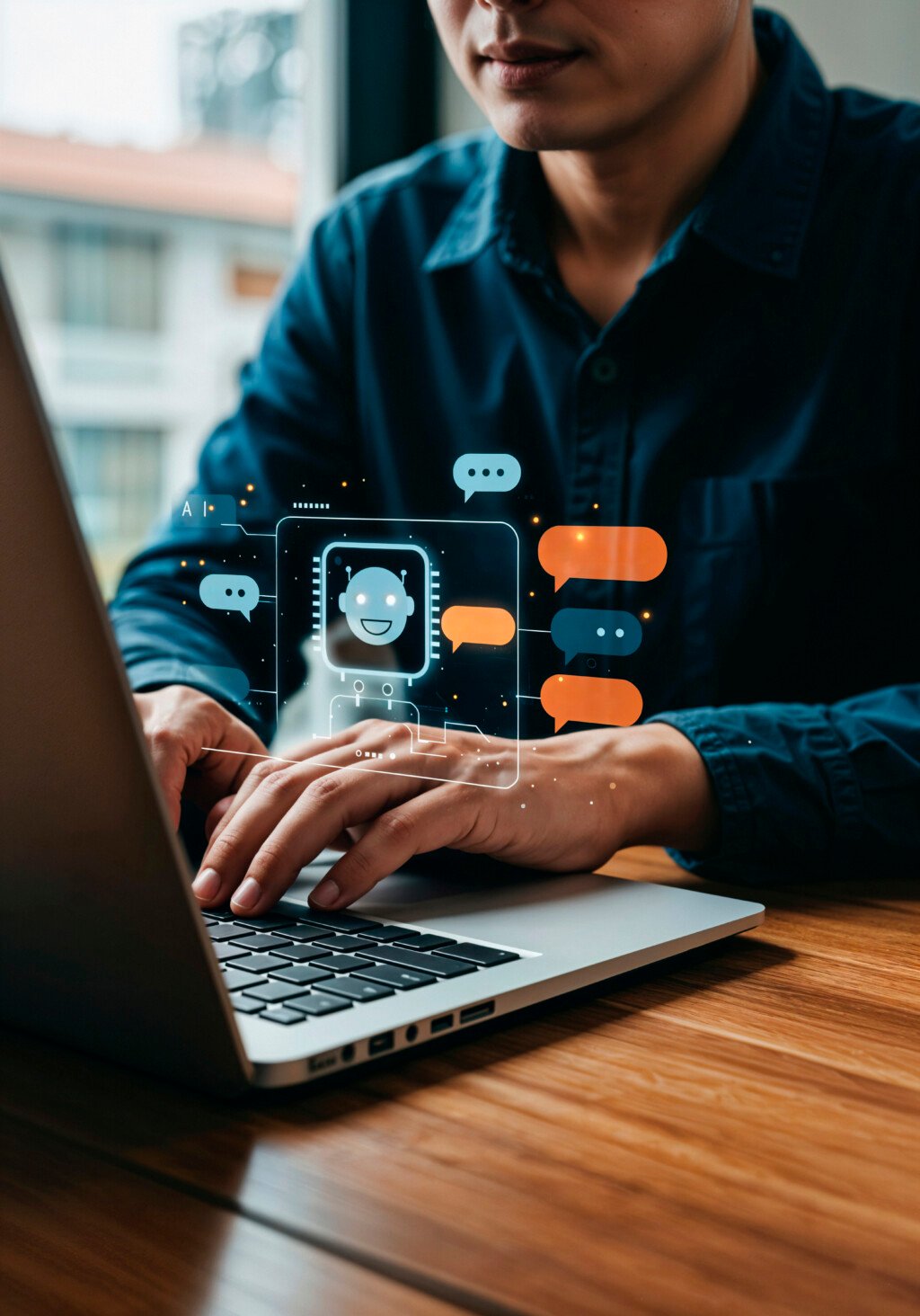
AI chatbot services help businesses automate customer conversations, support, sales, and lead generation using natural language processing, machine learning, and conversational AI delivering faster responses, lower costs, and better customer experiences across every channel, 24 hours a day.
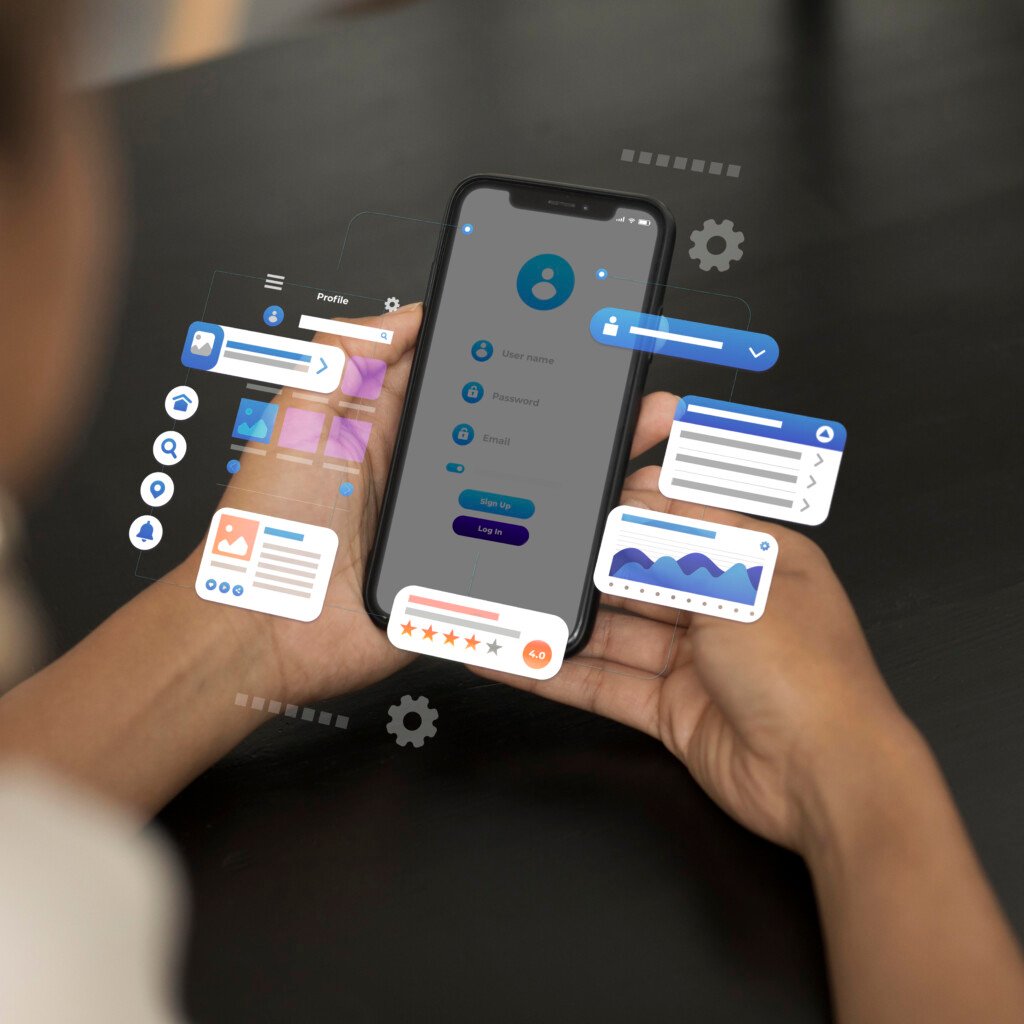
AI chatbot services cover the design, development, training, integration, and ongoing optimization of AI-powered conversational tools that interact with users through text or voice across websites, apps, messaging platforms, and other digital channels.
Unlike traditional rule-based chatbots that follow rigid decision trees and can only respond to exact keyword matches, AI chatbots use natural language processing (NLP) and natural language understanding (NLU) to interpret what users are actually saying — even when messages are phrased in unexpected ways, contain typos, or switch topics mid-conversation. They learn from data, improve with use, and can be trained on a business’s specific products, services, policies, and tone of voice.

Professional AI chatbot development can help businesses of every size and industry reduce operational costs, improve customer experience, increase lead conversion, and scale communication capacity without increasing headcount
An AI chatbot handles customer questions, complaints, order tracking, product information requests, and support issues instantly, at any hour, every day of the year without requiring additional staff. This eliminates the cost and complexity of staffing around the clock while consistently delivering fast and accurate responses to every customer who reaches out.
AI chatbots on websites and landing pages engage visitors the moment they arrive, ask qualifying questions, identify high-intent leads, deliver the right information at the right time, and connect the most promising prospects directly to sales teams dramatically reducing response time and improving conversion rates throughout the sales funnel.
A single AI chatbot can handle thousands of simultaneous conversations without any degradation in response quality or speed. As your business grows and customer interaction volume increases, your chatbot scales instantly — without the delays and costs associated with recruiting, hiring, and training additional support or sales staff.
Every customer who interacts with an AI chatbot receives the same quality, tone, and accuracy of response regardless of time, channel, or volume. This consistency builds trust, reduces the variation in customer experience that comes from large human support teams, and ensures your brand voice is maintained across every interaction.
There are many types of AI chatbot services, and the right solution depends on your business goals, industry, customer journey, existing technology stack, and the channels where your customers interact with your brand.
Customer support chatbot development creates AI-powered assistants that handle the most common customer service interactions automatically — answering FAQs, processing returns, tracking orders, providing product information, resolving account issues, and escalating complex cases to human agents when needed. A well-built support chatbot reduces ticket volume, decreases average response time, and improves customer satisfaction scores.
Lead generation chatbots engage website visitors proactively, ask qualifying questions, collect contact information, identify buyer intent, and route high-quality leads to the right sales team member. Sales assistant chatbots guide prospects through product comparisons, pricing options, and purchase decisions in real time reducing drop-off in the sales funnel and increasing conversion rates.
E-commerce chatbots help online stores improve the shopping experience by assisting customers with product discovery, size and compatibility recommendations, order status updates, return processing, promotional offers, and post-purchase support. They can integrate directly with Shopify, WooCommerce, Magento, and other e-commerce platforms to access real-time product catalog, inventory, and order data.
Appointment booking chatbots automate the scheduling process by allowing customers to book, reschedule, or cancel appointments directly through a conversational interface without the need for back-and-forth emails, phone calls, or manual calendar management. They integrate with calendar systems, send automated reminders, and handle rescheduling requests in real time.
Internal HR chatbots help organizations automate employee-facing processes — answering questions about company policies, benefits, leave requests, onboarding steps, payroll, compliance requirements, and internal procedures. They reduce the administrative burden on HR teams, improve response times for employee queries, and provide consistent answers to policy questions across the entire organization.
Custom NLP chatbot development builds fully bespoke conversational AI solutions trained on a business’s specific data, workflows, products, and terminology. This goes beyond template-based chatbot tools to create sophisticated AI assistants capable of handling complex, multi-turn conversations, integrating with proprietary business systems, and performing advanced actions such as retrieving personalized account data, processing transactions, or triggering automated workflows.
Chatbot integration services help businesses deploy existing chatbot platforms such as Intercom, Drift, Tidio, ManyChat, Botpress, Dialogflow, or ChatGPT API onto their website, app, or messaging channels. This includes configuring conversation flows, training the bot on business-specific content, integrating with CRM systems, help desk tools, and communication platforms, and setting up analytics and reporting.
After a chatbot is deployed, ongoing optimization is essential to keep it performing well. Chatbot analytics and optimization services monitor conversation quality, identify where users drop off or receive unhelpful responses, retrain the AI on new data, expand the chatbot’s knowledge base, add new conversation flows, and improve intent recognition and response accuracy over time.
There are different ways to access AI chatbot development support. The best option depends on your budget, the complexity of your chatbot, your integration requirements, and how quickly you need to launch.
A freelance AI chatbot developer can be a great choice for platform-based chatbot setup, conversation flow design, CRM integration, e-commerce chatbot development, and lead generation bots. Freelancers are often specialized, flexible, and more affordable than agencies for focused chatbot projects with clear scopes.
A digital agency or AI development agency may be better for larger, more complex chatbot projects that require a team covering conversation design, NLP engineering, backend integration, UX design, and ongoing optimization as part of a broader digital or AI transformation strategy.

Choosing the right AI chatbot developer is important because a poorly designed chatbot can frustrate customers, damage your brand, and fail to deliver the business outcomes you need.
Start by identifying the single most important problem your chatbot needs to solve. Is it reducing customer support ticket volume, capturing more leads, helping customers find products, booking appointments, or answering employee HR questions? A focused brief helps the developer design a chatbot that does one thing exceptionally well before expanding to additional use cases.
An effective AI chatbot rarely works in isolation. It typically needs to connect with a CRM, help desk platform, e-commerce system, calendar, payment gateway, or internal database. Before hiring, list every system the chatbot will need to integrate with so the developer can assess the technical complexity and choose the right architecture.
There are two main approaches to AI chatbot development. Platform-based solutions use existing tools like Dialogflow, Botpress, ManyChat, Intercom, or Tidio — which are faster to deploy and more affordable for most use cases. Custom-built solutions using the OpenAI API, Claude API, or proprietary NLP models offer greater flexibility and control for complex or highly specialized use cases. Confirm which approach fits your needs and budget before hiring.
Always ask to see examples of chatbots the developer has built. If possible, interact with live examples. Evaluate the quality of the conversation design — does the bot understand varied inputs, handle edge cases gracefully, maintain context across turns, and provide genuinely helpful responses? A strong portfolio demonstrates both technical skill and conversational design expertise.
Technical development alone does not make a great chatbot. Effective conversation design how the bot greets users, asks questions, handles unclear inputs, manages handoffs to human agents, and maintains a consistent tone is equally important. Ask how the developer approaches conversation design and user experience as part of the build process.
Before a chatbot goes live, it needs to be thoroughly trained on your business’s content and rigorously tested across a wide range of real-world scenarios. Ask about the training process, how the chatbot is tested before launch, what happens when the bot encounters questions it cannot answer, and how the handoff to a human agent is managed when needed.
A chatbot is not a one-time project — it requires ongoing monitoring, content updates, intent retraining, and performance optimization to remain effective. Before hiring, confirm whether the developer offers ongoing maintenance and optimization support, and how updates and improvements will be managed after the initial launch.
Finding the right AI chatbot professional becomes easier when you know what type of solution your business needs. On Finderdesk, you can explore AI chatbot developers based on your industry, platform, and project goals.
Hire a customer support chatbot developer if you need to automate answers to common customer questions, reduce support ticket volume, and deliver instant responses across live chat, WhatsApp, or email.
Hire a lead generation chatbot developer if you want to engage website visitors proactively, qualify leads automatically, and pass high-intent prospects to your sales team in real time.
Hire an e-commerce chatbot developer if you need a chatbot that integrates with your online store to help customers discover products, track orders, and complete purchases with less friction.
Hire a custom NLP chatbot developer if you need a sophisticated, bespoke conversational AI solution built on advanced language models that goes beyond what standard chatbot platforms can deliver.
Hire a chatbot integration specialist if you have already chosen a chatbot platform and need expert help with setup, CRM integration, conversation flow configuration, and deployment across your website or messaging channels.
Tell us about your chatbot project and we'll help you find the right customer support, lead generation, e-commerce, NLP, or chatbot integration specialist.
AI chatbot projects can fail when the scope is unclear, the wrong platform is chosen, or the chatbot is not properly designed for real users. Avoid these common mistakes before starting.
Attempting to build a chatbot that handles every possible customer scenario from day one leads to bloated, inconsistent, and hard-to-maintain conversation flows.
Many chatbot projects fail not because of poor technology but because of poor conversation design. Scripts that feel robotic, menus that are too rigid, or responses that do not address what users are actually asking all create frustrating experiences.
Not every chatbot platform suits every business need. A simple FAQ bot for a small website has very different requirements than a fully integrated sales assistant for an enterprise e-commerce platform.
An AI chatbot is only as good as the data it is trained on. If the chatbot is not trained on a sufficient range of real customer questions, it will frequently fail to understand user intent and deliver unhelpful responses.
Even the best AI chatbot will encounter situations it cannot handle. If the handoff to a human agent is not designed carefully including when it happens, how conversation history is passed to the agent, and how the user is notified it creates a frustrating experience that undermines the purpose of the chatbot entirely.
Launching a chatbot without extensive testing across real-world conversation scenarios, edge cases, and platform environments almost always results in a poor user experience at launch. Always test the chatbot with real users before going live.
AI chatbot services can help your business automate customer support, qualify leads faster, improve the shopping experience, book appointments, support employees, and deliver consistent, high-quality conversations at any scale — 24 hours a day, seven days a week, across every channel your customers use.
Whether you need a customer support chatbot, a lead generation bot, an e-commerce assistant, an appointment scheduling chatbot, an internal HR bot, a custom NLP conversational AI solution, or help integrating and optimizing an existing chatbot platform, the right developer can help your business deploy a chatbot solution that delivers real, measurable results.
Before hiring, define your chatbot’s primary purpose, identify your integration requirements, review previous chatbot projects, ask about conversation design and testing processes, and confirm what ongoing support and optimization will be included after launch. Clear preparation leads to a better chatbot and stronger business outcomes.
Here are common questions businesses ask before hiring Ai Chatbot Developer
An AI chatbot is a software application that uses artificial intelligence including natural language processing, natural language understanding, and machine learning to understand and respond to human messages in a conversational way. Unlike traditional rule-based chatbots that follow rigid scripts, AI chatbots can interpret varied phrasing, maintain context across a conversation, learn from interactions, and handle a wide range of queries without being explicitly programmed for every possible input.
The cost of AI chatbot development depends on the complexity of the solution, the platform used, the number of integrations required, and the developer’s experience. Chatbot built on an existing platform may cost $300–$1,500. A more sophisticated lead generation or customer support chatbot with CRM integration may range from $1,500–$8,000+. Fully custom NLP chatbot solutions built on advanced language models for enterprise use cases can cost $10,000–$50,000+, depending on scope and ongoing support requirements.
A rule-based chatbot follows a fixed decision tree it can only respond to inputs that match predefined keywords or menu options, and it breaks down when users phrase their questions in unexpected ways. An AI chatbot uses natural language processing to understand the meaning and intent behind messages, regardless of exactly how they are phrased. This makes AI chatbots far more flexible, capable of handling complex and varied conversations, and able to improve their performance over time through machine learning.
Common platforms for building AI chatbots include Dialogflow (Google), Botpress, ManyChat, Tidio, Intercom, Drift, IBM Watson Assistant, Microsoft Azure Bot Service, and the OpenAI ChatGPT API or Claude API for custom large language model-based solutions. The right platform depends on your use case, the channels you want to deploy on, your integration requirements, and whether you need a no-code setup or a fully custom build.
Yes. Professional AI chatbot development includes integration with your existing business tools CRM systems like Salesforce, HubSpot, or Zoho, help desk platforms like Zendesk or Freshdesk, e-commerce platforms like Shopify or WooCommerce, calendar systems, payment gateways, and internal databases. These integrations allow the chatbot to access real customer data, personalize responses, create support tickets, update records, and trigger automated workflows based on conversation outcomes.
AI chatbots can be deployed across a wide range of channels, including website live chat widgets, mobile apps, WhatsApp, Facebook Messenger, Instagram Direct, Telegram, Slack, Microsoft Teams, email, SMS, and voice interfaces. Multi-channel deployment ensures customers can interact with your chatbot wherever they prefer to communicate, creating a consistent experience across every touchpoint.
Timeline depends on the complexity of the solution. Chatbot built on an existing platform can be set up and deployed within one to two weeks. A more sophisticated customer support or lead generation chatbot with CRM integration typically takes four to eight weeks. A fully custom NLP chatbot or enterprise conversational AI solution can take three to six months or longer, depending on the scope of development, integrations, and training data requirements.
The key performance metrics for AI chatbot success include containment rate (the percentage of conversations fully resolved by the bot without human escalation), average response time, customer satisfaction score (CSAT), lead capture rate for sales bots, conversation completion rate, fallback rate (the percentage of messages the bot could not understand), and the impact on overall support ticket volume or sales conversion rate. A good chatbot developer will set up analytics and reporting so you can track these metrics from launch.
Get our latest news straight into your inbox